From the first smile to the first steps, a child’s early years are filled with countless moments of discovery, growth, and joy. Amidst these milestones, one essential ingredient fuels their development: play. Play is the universal language of childhood, a natural and intuitive way for children to make sense of the world around them. Through play, children learn, explore, and develop essential skills that lay the foundation for their future success.
Play is not just an activity to keep children occupied; it is a fundamental aspect of their holistic development. The American Academy of Pediatrics emphasizes that play is crucial for healthy child development, contributing to cognitive, physical, social, and emotional well-being. Through play, children engage their senses, imagination, and curiosity, paving the way for growth and learning across multiple domains.
In this blog post, we will explore how play helps children in different ways, shed light on the various stages of play that children naturally progress through, and highlight the crucial role parents and caregivers play in creating a rich and nurturing play environment.
Benefits of Play for Early Childhood Development
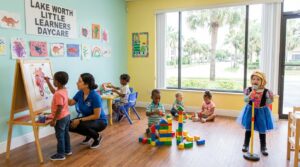
When playing, children develop cognitive skills as they navigate challenges, solve problems, and engage in imaginative thinking. Whether building with blocks, engaging in pretend play, or solving puzzles, their minds actively process information, laying the groundwork for critical thinking and problem-solving abilities. Play also serves as a platform for physical development, as children engage in active movements, refine their motor skills, and build strength and coordination.
Equally significant is the role of play in social and emotional development. Play provides a fertile ground for children to interact with peers, negotiate, cooperate, and develop vital social skills. Through imaginative play, they explore different roles and perspectives, building empathy, emotional intelligence, and an understanding of the world around them. This also offers a safe space for children to express their emotions, build resilience, and develop self-esteem.
Let’s explore other benefits.
- Cognitive Development: Children who engage in play encounter challenges that stimulate problem-solving skills, fostering their cognitive development. Through imaginative play, they exercise their creativity and expand their capacity for abstract thinking, nurturing their cognitive abilities. Additionally, play provides an avenue for language and communication development as children engage in conversations, storytelling, and role-playing, enhancing their vocabulary and linguistic skills.
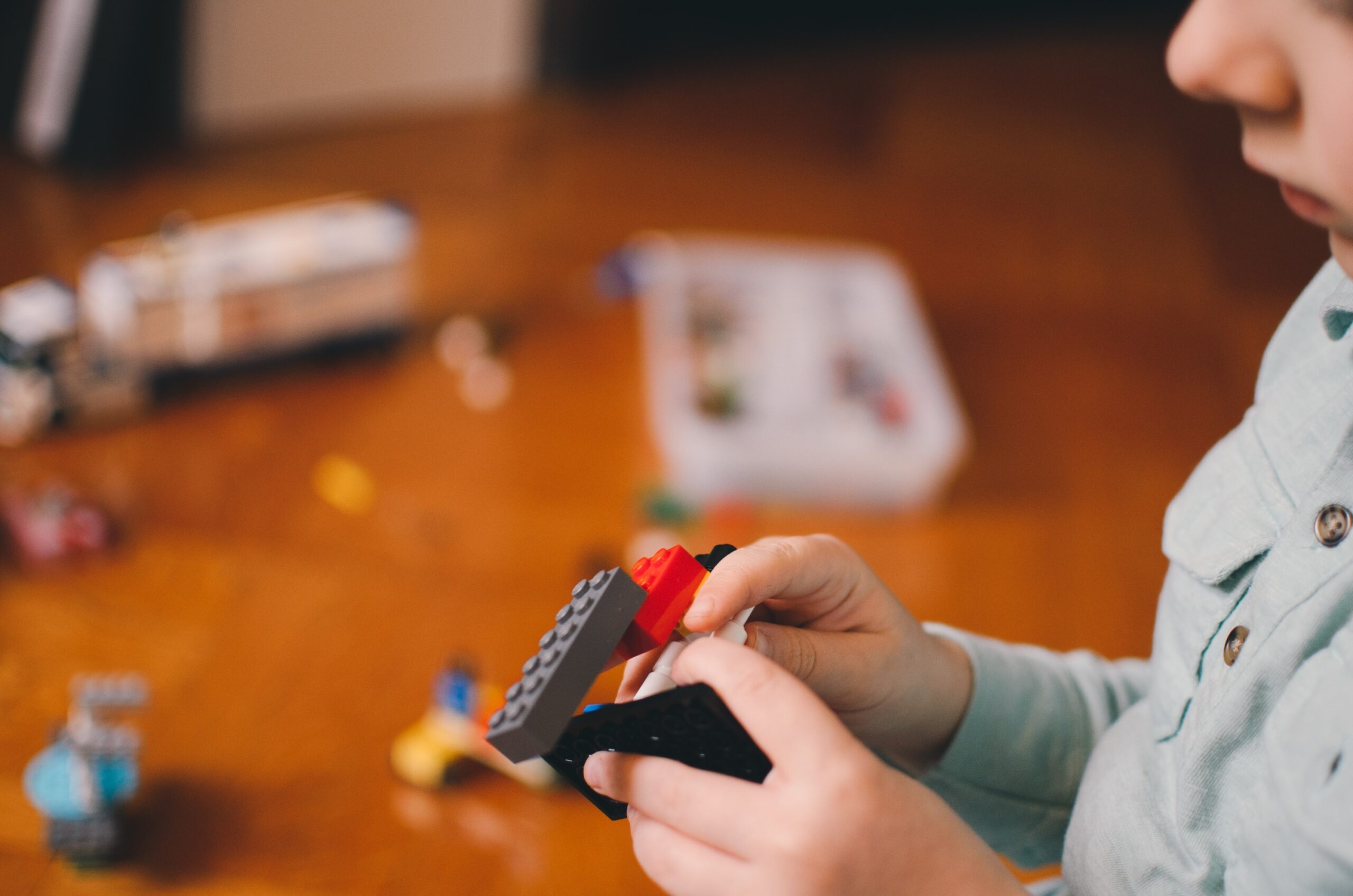
- Physical Development: Activities such as running, jumping, climbing, and dancing promote gross motor coordination, strength, and balance, contributing to their physical development. On the other hand, fine motor skills are honed through activities like building with blocks, drawing, and manipulating small objects, fostering dexterity and hand-eye coordination, which are essential for their physical growth.
- Social and Emotional Development: By engaging in play with peers, children learn valuable social skills such as taking turns, sharing, cooperating, and resolving conflicts, fostering their social development. Pretend play allows them to explore different roles, promoting empathy and understanding of others’ perspectives and contributing to their emotional development. Moreover, play provides a safe space for children to express and regulate their emotions, promoting self-esteem, confidence, and emotional well-being, which are crucial aspects of their social and emotional development.
At Creative Learning Experience, we understand and appreciate the diverse benefits of play in early childhood development and its profound impact on children’s overall growth and well-being. Encouraging and supporting play experiences that promote cognitive, physical, and social-emotional development lays a strong foundation for their future success.
Stages of Play in Early Childhood
Understanding the stages of play in early childhood provides insights into children’s evolving abilities and preferences. Let’s explore these stages:
- Unoccupied Play: This stage refers to when a child is not engaged in any specific play activity but rather engages in random movements or actions. It often occurs during infancy and serves as a way for children to explore their own bodies and the surrounding environment.
- Solitary Play: It is characterized by a child playing alone, engrossed in their activities and toys. During this stage, children are focused on their interests and enjoy the freedom to create and imagine without the influence of others.
- Spectator/Onlooker Behavior: Children observe and watch others playing without actively participating in this stage. They may show curiosity and interest in what others are doing but prefer to remain on the sidelines. This stage allows children to learn from and make sense of their peers’ play behaviors and interactions.
- Parallel Play: It is when children play alongside each other without direct interaction. They may use similar toys or engage in similar activities, but their play remains independent. This stage is common among toddlers and provides opportunities for children to be in the presence of others while focusing on their play.
- Associative Play: In this stage, children start to engage in more interactive play with their peers. They may share toys, take turns, and engage in simple social exchanges. Although there may not be a specific goal or coordinated effort, children begin to acknowledge and respond to each other during play.
- Cooperative Play: It is the most advanced stage, where children actively participate in organized play with shared goals, rules, and collaborative efforts. They work together, plan, and coordinate their play activities. Cooperative play promotes teamwork, problem-solving, negotiation, and the development of social relationships.
It’s important to note that these stages of play are not strictly sequential, and children may move between stages depending on their age, interests, and social development. Children gradually progress from solitary play to more interactive and cooperative forms as they grow and develop, reflecting their increasing social and cognitive abilities.
For us, understanding these stages of play provides valuable insights into children’s evolving play behaviors and helps us create appropriate environments and opportunities for play-based learning and social interaction.
The Role of Parents and Caregivers in Play
Parents and caregivers are pivotal in creating a supportive and engaging play environment for children. Here are some strategies to enhance play experiences:
- Provide a Safe and Stimulating Environment: Create a designated play area that is safe, child-friendly, and free from potential hazards. Ensure that age-appropriate toys and materials encourage exploration, creativity, and learning. A safe environment allows children to express themselves and engage in play without unnecessary risks freely.
- Encourage and Participate in Play: Actively participate in your child’s play experiences. Show genuine interest, enthusiasm, and curiosity. Join in their games, pretend play, or construction activities. Your involvement strengthens the bond between you and your child and provides opportunities for learning, language development, and social interactions.
- Promote Creativity and Imagination: Offer open-ended toys, art supplies, and materials for imaginative play. Encourage your child to think creatively, problem-solve, and express themselves through various mediums. Foster their imagination by asking open-ended questions, providing props, and supporting their storytelling or role-playing
- Facilitate Social Interaction: Arrange play dates or playgroups with other children to provide opportunities for social interaction and cooperation. Encourage sharing, taking turns, and problem-solving during play sessions. Help your child navigate social situations, promote empathy, and develop vital social skills like communication, cooperation, and conflict resolution.
- Be a Playful Observer: Allow your child to lead the play and explore their interests. Sometimes, stepping back and observing them can provide valuable insights into their preferences, strengths, and areas where they may need support. Be responsive to their cues and interests, offering guidance and encouragement when needed.
- Integrate Learning Opportunities: Use play as a platform for learning. Incorporate educational elements into these experiences, such as counting, sorting, storytelling, or introducing new vocabulary. This helps foster cognitive development and supports your child’s readiness for future academic pursuits.
- Embrace the Power of Unstructured Play: While structured activities and educational toys have their place, unstructured play is equally important. Allow your child unstructured playtime where they can freely explore, create their games, and follow their curiosity. Unstructured play nurtures independence, problem-solving skills, and self-directed learning.
At Creative Learning Experience, we understand the vital role of play in early childhood education. Our programs prioritize learning through play, ensuring that children have the best foundation for future success.
Our play-based curriculum integrates key developmental domains, including cognitive, physical, and social-emotional development, to provide children with a comprehensive and engaging learning experience. Contact us to know more!